inquiry
Leave Your Message

China Top Industrial Fire Rated Doors Manufacturers?

Industrial Fire Rated Doors are becoming a sharper purchasing concern for Chinese factories, warehouses, and logistics parks. NFPA’s Fire Loss in the United States During 2023 estimated 1,388,500 fires, 3,670 civilian deaths, and about $22.7 billion in direct property damage. These figures show why a door is not merely a steel panel. It is part of a tested fire compartment.

The CTIF World Fire Statistics report also highlights the continuing difficulty of comparing fire data across countries. Reporting systems differ. Factory risk does not. FM Global’s property loss prevention guidance stresses correct fire separation, reliable hardware, and regular inspection. UL Solutions and European testing practice likewise focus on complete door assemblies, including frames, glazing, closers, hinges, and seals. A strong manufacturer should explain these details clearly.

China has many capable Industrial Fire Rated Doors manufacturers, but a simple “top ten” ranking can mislead buyers. Factory size is not proof of fire performance. A polished catalog is not a test certificate. This outline will examine manufacturing experience, GB 12955 compliance, UL 10C or EN 1634-1 testing, quality systems, export records, and after-sales support. It will also consider whether certificates match the supplied model, hardware, dimensions, and installation method. That point is often overlooked.

The best supplier is not always the cheapest. Sometimes, the most convincing answer is a factory willing to show limitations, retest products, and document corrective action. That honesty matters. A careful comparison can help buyers select doors that protect people, equipment, and business continuity.
China Top Industrial Fire Rated Doors Manufacturers?

What Are Industrial Fire Rated Doors?

What Are Industrial Fire Rated Doors?

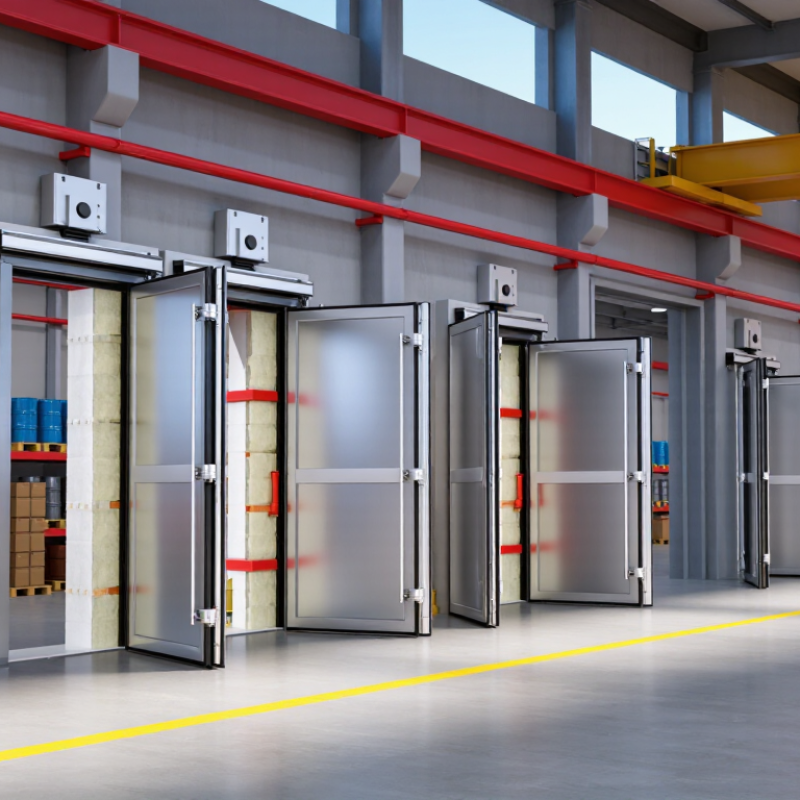
Industrial fire rated doors are engineered barriers that slow fire, heat, and smoke between working areas. They are used in factories, warehouses, workshops, plant rooms, and loading zones. Unlike ordinary steel doors, they are tested as complete assemblies. The door leaf, frame, hinges, closer, seals, and latch must work together. A certified rating may protect an opening for 30, 60, 90, or more minutes, depending on the tested design and local requirements.

From site experience, a door can look extremely strong and still perform poorly. Gaps, damaged seals, weak fixings, or a missing self-closing device can reduce protection. The rating belongs to the tested assembly, not just the metal panel. Industrial models often use insulated cores, reinforced frames, vision panels, and smoke-resistant seals. Selection should consider traffic frequency, forklift impact, temperature, humidity, and maintenance access. This step is often underestimated.

Tips: Check the certification before purchase. Confirm the wall rating matches the door rating. Measure the opening carefully. Inspect hinges, seals, and closers regularly. Do not wedge the door open. A practical inspection record helps reveal small faults before they become serious. Ask a qualified fire-door professional to verify installation and local compliance. Some facilities also need automatic release systems, but compatibility must be tested. Placement matters. A technically rated door may still be unsuitable for a busy loading route.
Which Fire Rating Standards Apply in China?

China Top Industrial Fire Rated Doors Manufacturers?

In China, fire-door selection starts with the building code, not a manufacturer’s brochure. GB 55037-2022 sets mandatory fire-safety requirements for buildings. GB 50016-2014, including later amendments, links door performance to occupancy, fire compartments, escape routes, and wall ratings. Product construction and fire-resistance testing are addressed by GB 12955-2023 and related test methods, including GB/T 7633.

Ratings are measured by fire integrity and insulation time. Project specifications may still use familiar Class A, B, and C descriptions. Typical examples include 1.5-hour, 1-hour, and 0.5-hour performance. However, the required rating depends on the exact opening location. A warehouse separation door is not automatically suitable for a stairwell. Check the approved fire design.

The National Fire and Rescue Administration reported approximately 945,000 fires in China during 2023. That figure makes traceable testing more than paperwork. A compliant door should match its tested leaf, frame, glazing, hardware, closer, and installation method. Small gaps around the frame matter. So does the door closer.

I would not approve a door from its label alone. Verify the test report, product identification, factory consistency, and site installation records. This is where procurement often becomes imperfect. Standards describe performance, but poor fitting can quietly reduce it. Inspections should follow the latest project approval documents and local enforcement requirements.

China Top Industrial Fire Rated Doors Manufacturers? - Which Fire Rating Standards Apply in China?

Product or Data Dimension Applicable Chinese Standard Typical Fire-Resistance Classes Main Performance Criteria Common Industrial Applications Compliance and Selection Notes
Steel hinged fire door GB 12955-2008, Fire Resistant Doors
Fire-resistance testing is generally conducted in accordance with GB/T 7633-2008.
Class A: 1.50 h, 1.00 h, or 0.50 h
Class B: 1.00 h, 0.50 h, or 0.30 h
Class C: 0.50 h, 0.30 h, or 0.20 h
Fire integrity and, where required by the class, thermal insulation for the specified period. The complete door set normally includes the leaf, frame, hinges, closer, lock, glazing, and other hardware. Plant rooms, electrical rooms, boiler rooms, warehouses, workshops, production buildings, and protected escape routes. The tested configuration should match the installed configuration, including door size, wall type, glazing, hardware, and installation method.
Steel double-leaf or unequal-leaf fire door GB 12955-2008
GB/T 7633-2008 for fire-resistance testing of doors and shutters.
Commonly specified as Class A 1.50 h, 1.00 h, or 0.50 h, subject to the approved product test result. Integrity, insulation where applicable, reliable self-closing, and correct coordination between the active and inactive leaves. Loading bays, factory corridors, logistics buildings, large equipment rooms, and fire compartments requiring wider access. Door coordinators, astragals, panic hardware, hold-open devices, and electromagnetic releases must be compatible with the fire-door design and fire alarm system.
Fire-rated glazed door or vision panel GB 12955-2008
GB/T 7633-2008 for the complete door assembly and its glazing arrangement.
The rating must correspond to the tested door assembly, such as Class A 1.00 h or Class A 1.50 h where specified by the design. The glass, glazing bead, sealant, frame, and door leaf must maintain the required fire integrity and insulation for the declared period. Control rooms, observation areas, laboratories, clean manufacturing areas, and internal industrial partitions. Ordinary architectural glass is not automatically fire-rated. The glass type, maximum panel size, orientation, and glazing system must be covered by the test evidence.
Fire-rated sliding door GB/T 7633-2008 for fire-resistance testing of doors and shutters
Project requirements may also refer to GB 12955-2008 where the product is classified as a fire door.
Typical declared ratings include 0.50 h, 1.00 h, and 1.50 h, depending on the tested design and project requirement. Fire integrity, insulation when required, controlled closing, guide-track performance, and reliable operation after release of the hold-open system. Large openings between production zones, warehouses, workshops, plant rooms, and industrial access routes. Clear opening dimensions, stacking space, floor level, travel path, smoke seals, and automatic closing interfaces should be checked before selection.
Fire shutter or fire-rated rolling door GB 14102.1-2017, Fire Shutters—Part 1: General Technical Requirements
Fire-resistance testing may also reference GB/T 7633-2008.
Common project specifications include 1.00 h, 2.00 h, and 3.00 h, but the permitted rating depends on the certified product configuration. Fire integrity, smoke-control performance where specified, automatic descent, obstacle protection, emergency release, and curtain or slat stability. Large warehouse openings, loading areas, shopping or logistics facilities, parking areas, production lines, and compartment boundaries. A fire shutter is not automatically interchangeable with a fire door. The required product type must be confirmed by the building fire-compartment design.
Fire-rated industrial personnel door GB 12955-2008 when classified as a fire door
GB 50016-2014 with its 2018 amendment, together with GB 55037-2022, for building fire-protection design requirements.
Often selected as Class A 1.00 h or Class A 1.50 h in high-risk industrial areas, subject to the project fire strategy. Fire resistance, self-closing, smoke leakage control where required, safe egress operation, and compatibility with access-control equipment. Factories, hazardous-process support areas, utility rooms, maintenance zones, and internal fire-separated compartments. Access-control locks should fail safely during a fire. Any electric strike, magnetic lock, or automatic operator should release or close as required by the approved fire-safety design.
Building fire-compartment requirement GB 55037-2022, General Code for Fire Safety of Buildings and Structures
GB 50016-2014 with its 2018 amendment may remain relevant where not superseded or otherwise applicable.
The required door rating is determined by the fire-resistance rating of the wall, room, shaft, corridor, or compartment and by the building use. The door assembly must preserve the required separation, limit fire and smoke spread where specified, and maintain required escape and evacuation functions. Industrial buildings, warehouses, high-rise facilities, underground spaces, energy facilities, and mixed-use developments. A product rating should never be selected in isolation. The final rating depends on occupancy classification, building height, hazard level, compartment layout, opening size, and local authority review.
Testing and conformity documentation GB/T 7633-2008 for fire-resistance testing of doors and shutters
GB/T 9978 series may apply to general fire-resistance testing principles for building elements.
The declared period must be supported by a valid test report or conformity documentation for the specific product configuration. Evidence should identify the specimen construction, dimensions, materials, hardware, glazing, installation conditions, and achieved fire-resistance duration. All industrial projects where fire-rated openings are required by the design or approval documents. Request Chinese-standard test documentation, product specifications, installation instructions, factory quality records, and maintenance procedures before procurement.
Important selection note: Chinese fire-resistance ratings are not selected solely by door material or thickness. The required rating must be confirmed against the approved architectural fire-safety design, the applicable building code, the opening location, and the tested complete door or shutter assembly. Local project authorities may require additional documentation or updated standards.

How Are Industrial Fire Rated Doors Designed and Tested?

China Top Industrial Fire Rated Doors Manufacturers?

How Are Industrial Fire Rated Doors Designed and Tested?

Industrial fire-rated doors are designed as complete assemblies, not isolated steel panels. Engineers select steel skins, mineral cores, reinforced edges, and heat-resistant hardware. Intumescent seals expand when exposed to heat, closing gaps around the leaf and frame. Clearances matter. A few millimeters can affect performance.

Testing follows recognized standards, including UL 10C, NFPA 252, and EN 1634-1. The door, frame, hinges, locks, glazing, and seals are tested together inside a furnace. The assembly faces controlled heat, pressure, and sometimes hose-stream exposure. Ratings commonly range from 60 to 180 minutes, depending on the tested configuration. Substitution is risky. A stronger panel cannot automatically replace approved hardware.

NFPA’s Fire Loss in the United States During 2023 estimated 1,388,500 fires and approximately 22.2 billion dollars in property damage. These figures explain why industrial facilities need traceable test evidence and disciplined installation. NFPA 80 also emphasizes inspection, maintenance, and clearances after installation. In practice, damaged seals, blocked door swings, or unapproved field changes can reduce protection. The uncomfortable truth is simple: a certified door can still fail when maintenance becomes an afterthought. Testing proves one assembly under defined conditions, not every installation in the field.

Who Are China’s Leading Industrial Fire Rated Door Manufacturers?

Who Are China’s Leading Industrial Fire Rated Door Manufacturers?

China’s leading industrial fire rated door manufacturers are usually specialized factories, not general metalwork suppliers. They produce steel fire doors, sliding doors, rolling shutters, and large industrial assemblies. Strong manufacturers control design, welding, insulation, coating, hardware, and final inspection under one system. Their doors often serve factories, warehouses, power facilities, logistics centers, and transport buildings.

From practical project reviews, reliable suppliers provide tested fire ratings, installation drawings, maintenance guidance, and traceable production records. They should explain core materials clearly, including steel thickness, insulation density, seals, hinges, vision panels, and closing devices. Certification matters, but documents must match the exact door size, construction, and market requirement. A certificate alone proves little. Factory audits, sample testing, and reference projects offer stronger evidence. No supplier is perfect; even experienced manufacturers may need better communication on custom dimensions or delivery schedules.

Tips: Ask for a complete technical submittal before ordering. Check test reports, factory quality procedures, and spare-part availability. Confirm whether the door was tested as a complete assembly, not as separate components. Request photographs of welding, insulation placement, and finished hardware. Small details can affect fire performance. Evaluate after-sales support too, because installation errors may reduce real protection.

How Should Buyers Evaluate Chinese Fire Rated Door Suppliers?

Choosing a Chinese fire rated door supplier requires more than comparing catalog prices. Buyers should verify how each door was tested, built, and documented. Ask for current fire test reports from accredited laboratories, not only product brochures. Check the tested door size, wall type, glazing, hardware, and rating period. A report for one assembly may not cover another. This detail is often missed.

Request a factory video call, then inspect the production line when possible. Look at steel thickness, weld quality, frame corners, hinge reinforcement, and intumescent seals. Ask how material batches are traced from incoming steel to final inspection. Reliable suppliers can explain tolerances, moisture protection, packaging, and replacement procedures. Obtain a sample door, but do not judge performance from appearance alone. A heavy door can still have weak edges.

Review installation instructions with the supplier before ordering. Confirm opening dimensions, anchoring methods, hardware compatibility, and site responsibilities. Ask for inspection records, training support, and a clear warranty process. References from comparable projects add useful evidence, especially in hospitals, factories, or apartment buildings. I would also compare response times during a technical dispute. Cheap quotations deserve extra questions. We sometimes overtrust polished documents; an independent inspection can expose gaps before shipment. No supplier is perfect, so record every assumption in writing.

How Buyers Should Evaluate Chinese Fire Rated Door Suppliers

Common fire-resistance rating durations used in project specifications and certification testing

Buyers should confirm that the supplier can provide a valid third-party test report, classification certificate, installation instructions, hardware details, production quality records, and traceable samples for the required rating. Common project ratings include 30, 60, 90, 120, and 180 minutes; the correct selection depends on the building code, wall assembly, occupancy, and tested door configuration. European projects commonly reference EN 1634-1 and EN 13501-2, while North American projects often reference UL 10C or NFPA 252.

Reference framework: EN 1634-1, EN 13501-2, UL 10C, and NFPA 252. Rating durations shown are commonly specified fire-door performance levels and are not company or brand performance data.