086 15318950099


Choosing a Fire Door With Glass is not only a design decision. It is a life-safety decision.
The National Fire Protection Association reported 1,504,500 fires in the United States during 2023, causing 3,670 civilian deaths and extensive property loss. These figures explain why fire-rated openings deserve careful attention. A glazed door may improve visibility between corridors and rooms, yet its glass, frame, seals, hardware, and installation must work as one tested assembly. One attractive door can still be the wrong door.
This guide presents seven practical tips for evaluating fire doors with glass. It considers fire-resistance ratings, glass certification, frame compatibility, smoke control, hardware, installation quality, and maintenance. NFPA 80 emphasizes that fire door assemblies require proper inspection, testing, and maintenance. UL 10C and related product testing standards also show why laboratory evidence matters. Ratings should never be guessed from appearance.
Pay attention to details. Check the label near the hinge edge. Look for listed glazing and compatible intumescent seals. Confirm that the closer shuts the leaf completely. Small gaps can matter. A bright showroom can hide poor installation.
The process is not always simple. Product names may sound reassuring, but marketing language is not certification. Requirements also vary by building type, location, and adopted code. Consult the authority having jurisdiction and qualified fire-door professionals before purchasing. These seven tips cannot replace a project-specific review, but they can prevent expensive and dangerous assumptions.
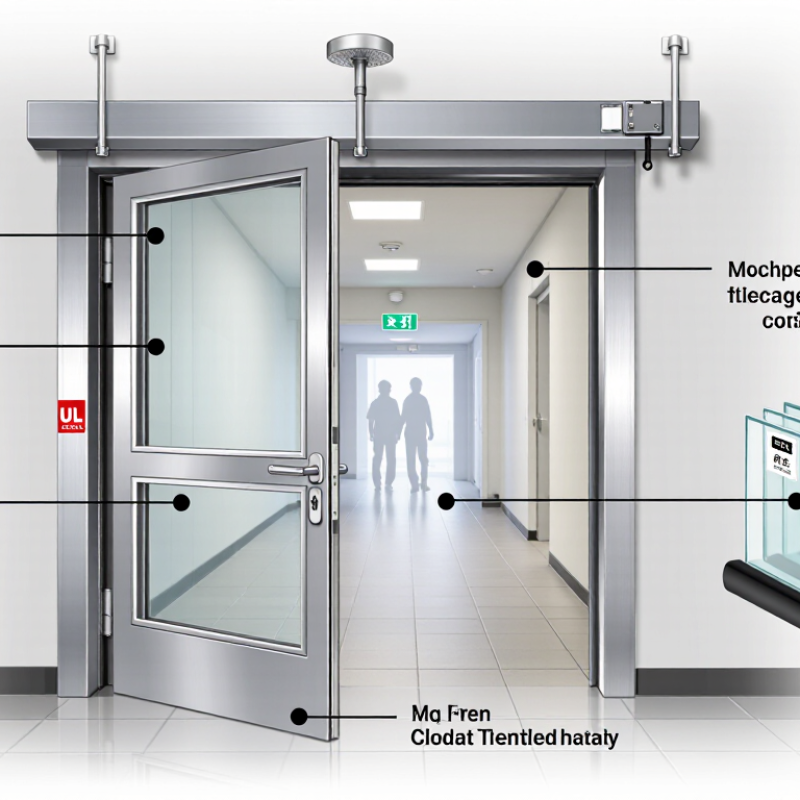
Choosing a fire door with glass requires more than selecting a clear panel. Confirm the required fire rating from the building code and the opening’s location. A 20-minute door is not automatically suitable for a 60-minute wall. NFPA 80 and the International Building Code require compatible doors, frames, glazing, and hardware as a tested assembly.
Check the glass label, not only its appearance. Verify the rating, hose-stream approval, temperature-rise limits, and maximum exposed area. Use only listed glazing materials and approved glazing beads. Confirm the frame label too. It matters. The National Fire Protection Association reported 1,388,500 U.S. fires and 22.8 billion dollars in direct property damage during 2023. A small compliance shortcut can become a costly failure. NFPA 252 and UL 10C testing also evaluate fire exposure and, where applicable, hose-stream performance.
Inspect the installation closely. Look for intact labels, correct hinges, self-closing action, positive latching, and permitted gaps around the door. Never drill the glass or replace hardware casually. At the job site, I would check whether the door closes fully after repeated use, because real corridors are rarely gentle. Confirm accessibility and egress requirements as well. Product documentation should identify the tested assembly, installer limits, and maintenance schedule. This is where many specifications become vague. Reflect, then verify with the code official and the test listing.

Understanding fire-rated glass door requirements starts with matching the tested door assembly to the required fire-integrity period. The chart shows common European E-class integrity durations.
The E classification represents fire integrity: the ability of the glazed element to resist the passage of flames and hot gases for the stated period. E30, E60, E90, E120, and E180 correspond to 30, 60, 90, 120, and 180 minutes respectively. Actual compliance depends on the local code and the performance of the complete tested door assembly.
Choosing a fire door with glass requires more than checking its appearance. The certification label is the critical evidence. NFPA 80 requires fire door assemblies to be properly labeled, installed, inspected, and maintained. Check the door, frame, glazing, hinges, closer, and latch as one tested assembly. A certified door cannot compensate for uncertified glass.
Ask for the exact fire-resistance rating, such as 20, 45, 60, or 90 minutes. Confirm the test standard, including NFPA 252 or UL 10C, and verify whether the glass carries its own fire-rated marking. Ordinary tempered glass is not automatically fire-rated. The frame should also show compatible certification. Look closely at the label; vague wording is a warning sign. Certification records should come from an accredited testing or certification body, not only a supplier’s brochure.
NFPA reported approximately 1.39 million fires in the United States during 2023. Rated openings can slow fire and smoke movement, but only when every component works together. On-site experience shows small details matter: a missing closer, loose screws, or a damaged seal can undermine performance. I have seen labels treated as decoration. That assumption is risky. Confirm installation requirements before ordering, because later glass, hardware, or vision-panel changes may invalidate the listing. Keep the inspection record, too. It may seem excessive, but missing paperwork creates uncertainty when protection matters most.
A fire door with glass must protect people without blocking useful visibility. Choose glass tested for the door’s exact fire rating, not simply a thick-looking panel. Ceramic, wired, and specially treated glass provide different levels of heat resistance. Confirm whether the requirement covers integrity, insulation, or both. Labels matter. Ask for test evidence from a recognized certification body, including size limits and installation conditions.
The frame material is equally important. Steel frames usually offer strong fire performance, while timber frames need approved construction and protective seals. Some aluminum systems can work, but only within a tested door assembly. Never combine a high-rated glass panel with an untested frame. That mistake is easy to make. Check the glazing bead, setting blocks, intumescent seals, and fasteners. Each component must suit the heat exposure and door design.
Measure the opening carefully, because oversized glass can reduce the certified rating. Review the manufacturer’s installation instructions with the installer before ordering. On site, inspect seals for gaps, crushed corners, or incorrect joints. In practice, small fitting errors often cause bigger concerns than the glass specification. I would also question attractive low-cost options when their certification paperwork is unclear. Visual appeal matters, but reliable evidence matters more. Recheck the final assembly after installation, since a compliant product can still perform poorly when fitted carelessly.
Evaluating Safety Features, Installation, and Maintenance
A glass fire door must be selected as a complete, tested assembly, not as a door with ordinary glazing. Check the required fire rating, vision-panel size, frame, seals, closer, and hardware together. The glass should carry suitable fire-test evidence, such as testing under UL 10C or an equivalent standard.
NFPA’s Fire Loss in the United States During 2022 recorded about 1.5 million fires and $18.1 billion in property damage.
These figures show why a decorative glass choice deserves serious scrutiny. Small gaps matter.
Installation often decides whether the specification works in practice. The frame must be anchored correctly, the door must close fully, and the latch must engage without force. Follow NFPA 80 inspection and installation requirements, while also checking local building rules.
Uneven floors can leave a visible gap below the leaf. That detail is easy to miss. I have seen attractive installations weakened by unsuitable hinges or poorly fitted smoke seals.
Do not guess.
Maintenance should include documented inspections, not occasional visual checks. Look for cracked glass, loose fasteners, damaged seals, blocked closers, and changes in alignment. Test self-closing and latching functions during routine inspections. Keep records.
NFPA 80 calls for periodic inspection by qualified personnel, with deficiencies corrected promptly. A clean door can still be unsafe.
The checklist may also miss real use conditions, such as wedges, repeated impacts, or furniture restricting the swing. Reassess those daily habits before approving the final installation.
7 Tips for Choosing a Fire Door With Glass
Comparing Compliance, Performance, and Long-Term Value
A fire door with glass must be evaluated as a complete assembly. The door leaf, glazing, frame, seals, hinges, and closer must work together. Confirm the required fire-resistance period for your building. Ask for independent test reports and traceable certification. Do not rely on attractive product photos alone. A small mismatch can weaken protection.
Tip 1: Check that the glazing is tested within the proposed door system. Tip 2: Match the frame and hardware to the approved configuration. Tip 3: Review smoke-control performance, not only fire duration. Tip 4: Confirm clear labels and installation instructions. These details reduce uncertainty during approval and inspection.
Performance also affects daily value. Select glazing that supports visibility without creating excessive heat or glare. Consider impact resistance in busy corridors. Check whether the closer operates smoothly after repeated use. Maintenance access matters too. Inspect seals, hinges, and closing speed at planned intervals. In practice, poor installation can cancel excellent laboratory results. That point is easy to underestimate. Long-term value means fewer disruptions, simpler maintenance, and dependable protection over many years. Still, the cheapest compliant option may not remain the cheapest after repairs, replacement parts, and repeated inspections.
| Tip | Decision Dimension | What to Check | Practical Benchmark or Evidence | Long-Term Value | Common Risk |
|---|---|---|---|---|---|
| 1 | Confirm the required fire rating | Identify the required fire-resistance period for the opening, wall, corridor, stairwell, or compartment. Confirm whether the requirement covers fire integrity only or also insulation and smoke control. | Common door ratings include 20, 45, 60, 90, and 120 minutes, but the correct rating depends on the local code, wall rating, occupancy, and test standard. | Correctly matched ratings reduce approval delays, replacement costs, and the risk of non-compliant installations. | Choosing a door based only on appearance or nominal thickness without checking the required tested rating. |
| 2 | Verify the complete tested assembly | Review certification for the door leaf, glass, glazing beads, frame, hinges, closer, latch, seals, and any vision panel. Components should be approved for use together. | Certification should identify the complete assembly, maximum glass size, permitted frame materials, hardware limitations, and installation conditions. | Using a documented assembly makes future maintenance, inspection, and regulatory review easier. | Combining separately rated components that have not been tested as one fire-door assembly. |
| 3 | Compare glass performance | Check whether the glazing provides integrity, insulation, or both. Confirm the approved glass thickness, dimensions, orientation, and glazing system. | Fire-rated glass may be categorized as integrity-only or insulation-rated. Larger vision panels generally require specially tested glazing systems and may reduce available design options. | Appropriate glass improves visibility while supporting the required level of fire and heat protection. | Assuming any wired, laminated, or tempered glass is suitable for a fire-rated door. |
| 4 | Evaluate smoke and air leakage control | Determine whether the project requires smoke-control performance in addition to fire resistance. Check perimeter seals, meeting stile seals, bottom gaps, and frame tolerances. | Smoke-control requirements are jurisdiction-specific. A compliant assembly may require tested leakage limits and approved intumescent or smoke seals. | Better smoke control can improve evacuation conditions and reduce costly remedial work after inspection. | Focusing only on the minute-based fire rating while overlooking smoke migration through gaps. |
| 5 | Assess daily-use durability | Consider traffic volume, impact exposure, door weight, hinge capacity, closer strength, cycle rating, and the durability of the finish and glazing system. | High-traffic locations may require heavy-duty hardware, reinforced fixing points, protective plates, and a documented cycle or endurance rating. | A durable assembly reduces sagging, misalignment, hardware replacement, and premature glass or seal damage. | Installing a light-duty door in a busy corridor, healthcare area, school, or commercial entrance. |
| 6 | Check installation and maintenance requirements | Confirm the approved wall construction, frame anchorage, clearances, glazing method, closer adjustment, latch engagement, and inspection schedule. | Fire doors should remain self-closing and positively latching where required. Damaged seals, excessive gaps, removed self-closers, and unapproved field modifications can invalidate performance. | Planned inspections and replaceable hardware extend service life and preserve compliance. | Assuming a certified product remains compliant after field cutting, drilling, painting, or hardware changes. |
| 7 | Compare total cost of ownership | Compare purchase price with installation, approved hardware, maintenance, replacement parts, cleaning, inspection, energy impact, and expected service life. | A lower initial price may be offset by specialist installation, limited replacement parts, frequent adjustment, or costly non-compliance corrections. | Prioritize documented compliance, durable components, serviceable hardware, and readily available replacement seals and glazing parts. | Selecting the cheapest quotation without comparing certification scope, warranty terms, maintenance needs, and lifecycle cost. |
Important: Fire-door requirements vary by jurisdiction, building use, wall construction, and applicable test standard. Always verify the complete door-and-glazing assembly with the local authority, code professional, or qualified fire-door inspector before specification and installation.